Safety essentials
A mounted television hangs over people, furniture and, often, children. These are the checks worth making every time — and the moments to stop and call someone qualified.
Mounting a TV is well within reach for many people, but it isn't risk-free. Most accidents come from skipping one of four checks: weight, wall, electrics, and honesty about your own limits.
Weight and ratings
Confirm your television's weight and VESA pattern, then confirm the mount is rated to carry more than that — with margin. A bracket at the edge of its limit has nothing left for the leverage of a moving arm or an accidental knock.
Wall capacity
Match the fixing to the wall. Plasterboard needs the load carried by the studs behind it; masonry needs the right plug for the material. A fixing that only grips surface board is the most common cause of a screen coming down.
Hidden services
Before drilling, scan for electrical cables and pipes with a detector. They often run vertically from sockets and switches. Drilling into a live cable or a water pipe is both dangerous and expensive.
The right help
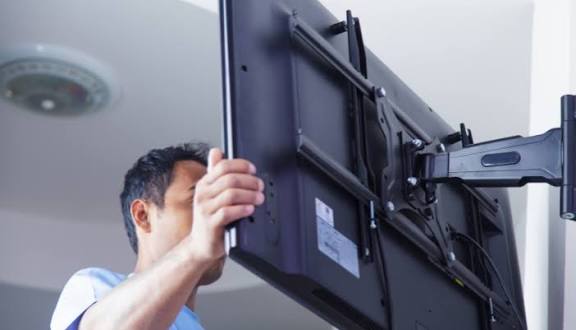
Lifting a large screen onto a bracket is genuinely a two-person job. One person holds and guides while the other secures. Rushing this step alone is how screens get dropped and backs get hurt.
When to call a professional — not a suggestion, a line
Please bring in a qualified tradesperson if any of these are true:
- The screen is large or heavy and the wall type is uncertain.
- The job needs new mains wiring, a new outlet, or any work behind the plaster you aren't trained to do.
- You can't confirm what's inside the wall, or the building is old and its construction is unknown.
- You'd be working at height or in an awkward position without proper support.
There is no prize for doing risky work yourself. A professional installer or electrician is the safe, sensible choice in these situations.
A simple pre-drill checklist
Run through this before the first hole.
- ✓
Weight confirmed
TV weight and VESA checked against the mount's rating, with margin.
- ✓
Wall identified
Surface and solid fixing points known; correct fixings on hand.
- ✓
Services scanned
Cables and pipes located and avoided along the drill path.
- ✓
Help arranged
A second person ready for the lift and final tighten.
- ✓
Level to hand
A spirit level ready to check before the last turn of the bolt.
Safety sorted — now the how.
With the checks in mind, the guides walk through each decision in detail.